Introduction
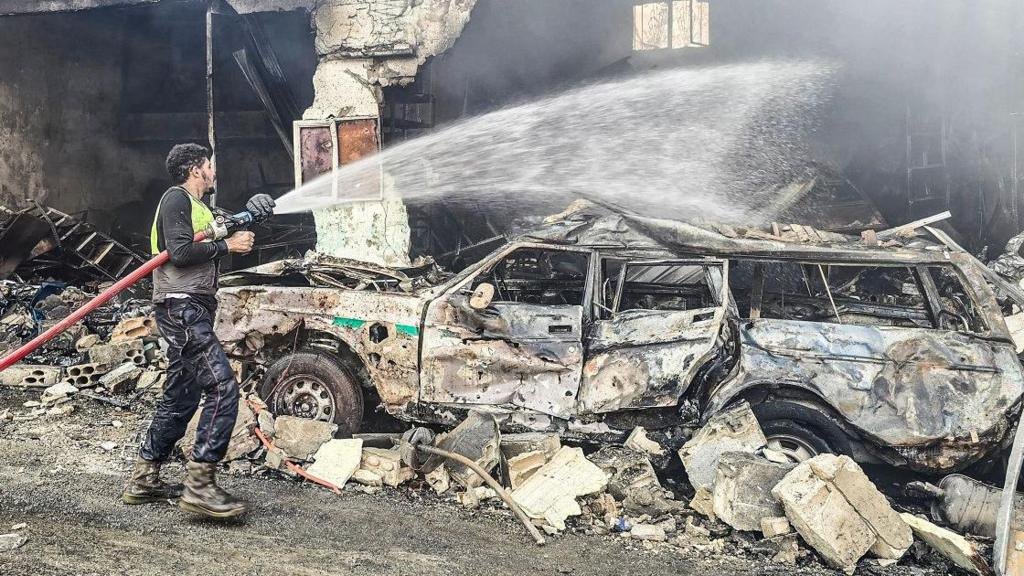
Tensions in the Middle East have surged dramatically as Benjamin Netanyahu said Israel’s military campaign against Iran is “beyond the halfway point” in achieving its objectives. At the same time, an Iranian attack sparked a fire on a Kuwaiti oil tanker near Dubai — underscoring the widening conflict that is disrupting global markets and regional security.
Netanyahu’s Statement on Iran Campaign
Netanyahu said that more than half of the military objectives in the Iran conflict have been achieved, particularly in degrading Iran’s military, nuclear, and industrial infrastructure.
He stressed that this measurement relates to mission success rather than a fixed timeline.
While expressing confidence, he avoided putting an exact end date on the campaign.
His remarks come amid ongoing strikes and military operations across multiple fronts.
Kuwaiti Oil Tanker Hit Near Dubai Port
A fully loaded Kuwaiti oil tanker, the Al Salmi, was struck in waters off Dubai’s port anchorage in what authorities say was an Iranian drone attack.
The incident ignited a fire on board, which was later extinguished by emergency teams.
Dubai authorities reported no injuries and no confirmed oil spill after the blaze was brought under control.
All crew members aboard the tanker were reported safe.
The strike damaged the ship’s hull and raised concerns about potential environmental impact in Gulf waters.
Broader Conflict and Regional Escalation
The attack on the tanker is part of an escalation that follows U.S.–Israeli strikes on Iran, which began late in February.
In recent days:
- Iran has fired missiles across the region and launched drone attacks as part of its retaliation.
- The U.S. has carried out strikes on Iranian military targets, heightening the war’s intensity.
- Multiple fronts, including in southern Lebanon and Gulf states, are seeing ongoing clashes.
The situation continues to expand beyond direct battle zones, affecting strategic energy routes and nearby nations.
Impact on Global Energy Markets
Global oil markets remain highly volatile due to the ongoing conflict and recent tanker strike.
Brent crude surged above $115 a barrel as fears of further disruptions intensified.
Shipping routes in the Gulf, including the Strait of Hormuz — a key artery for about 20% of the world’s oil — have been disrupted, further fueling price spikes and economic uncertainty.
Risk of Wider Escalation
The conflict’s momentum shows no signs of easing, and analysts warn that attacks on commercial and civilian targets could broaden the war’s scope.
Both military and political leaders are warning that further retaliation or miscalculations could escalate the crisis even more.
Conclusion
Netanyahu’s claim that military goals are “beyond halfway” reflects growing confidence in the campaign’s progress, particularly against Iran’s strategic capabilities.
However, the recent Iranian-linked strike on a Kuwaiti oil tanker near Dubai underscores the war’s spreading reach and intensifying risks.
With rising oil prices, unstable shipping routes, and continuous military exchanges, the Middle East conflict has entered a critical and unpredictable phase.
If tensions are not contained, the fallout could extend far beyond the region, affecting global energy markets and economic stability.