Introduction
Global tensions in the Middle East have once again become a major focus of international news. Reports circulating in media and online platforms suggest a possible escalation involving the United States and Iran, including claims of a potential naval blockade targeting Iranian ports. At the same time, unrelated political and religious commentary involving the Vatican and former US President Donald Trump has added further attention to the situation.
While much of this information remains unconfirmed and should be viewed with caution, the discussion highlights ongoing concerns about maritime security, energy supply chains, and diplomatic stability in the Gulf region.
This article breaks down the situation in simple English, explains what such developments could mean, and explores possible global impacts of rising tensions.
Understanding the Reported Situation
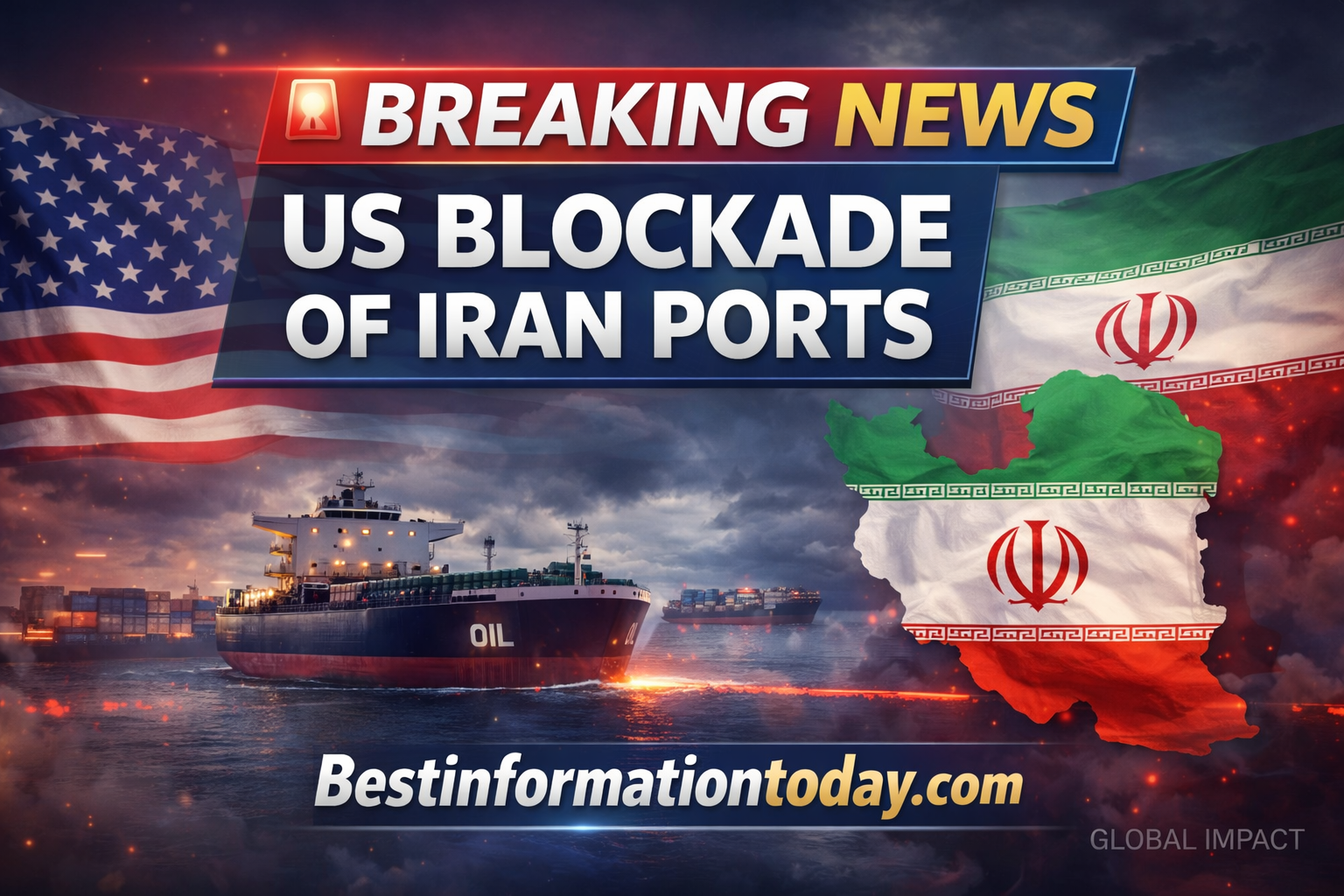
The phrase US blockade of Iran’s ports has been circulating in recent discussions and speculative reports. According to these claims, there could be a scenario where the United States increases naval pressure in the Persian Gulf region, potentially restricting maritime access to Iranian ports.
It is important to clarify:
- No official confirmation has been made by the US government.
- Iran has not acknowledged any imminent blockade situation.
- Much of the discussion appears to be based on geopolitical speculation.
Still, the idea reflects long-standing tensions between the two nations, especially regarding nuclear negotiations, sanctions, and control over critical shipping routes.
Why the Strait of Hormuz Matters
A major reason this topic draws global attention is the strategic importance of the Strait of Hormuz.
Key facts:
- Around 20% of global oil passes through this narrow waterway.
- It connects the Persian Gulf to the Arabian Sea.
- Iran has influence over parts of this maritime corridor.
If tensions escalate in this region, global oil prices, shipping costs, and supply chains could be affected almost immediately.
Possible risks include:
- Increased oil prices in the US and Europe
- Delays in global shipping routes
- Higher insurance costs for cargo ships
- Military confrontation risks at sea
US–Iran Relations: A Brief Background
The idea of a US blockade of Iran’s ports cannot be understood without looking at the history of US–Iran relations.
Key points:
- Relations have been strained since 1979 after the Iranian Revolution
- The US imposed multiple rounds of economic sanctions on Iran
- Iran’s nuclear program has been a major point of disagreement
- Naval tensions in the Gulf have occurred several times over the past decades
For example:
- In 2019, tanker attacks in the Gulf raised global concerns
- In 2020, tensions increased after the killing of Iranian General Qassem Soleimani
- Sanctions continue to restrict Iran’s oil exports
Vatican Commentary and Trump War Debate Claims
Recent discussions also mention remarks attributed to the Pope, suggesting he would not engage in a debate about war with Donald Trump. However:
- No verified statement confirms a direct war debate between the Pope and Trump
- The Vatican generally promotes peace and diplomatic dialogue
- The mention appears to reflect commentary or interpretation rather than an official diplomatic exchange
The inclusion of religious leadership in political discussions often reflects global concern about potential conflict escalation, even if no formal diplomatic role is involved.
Possible Scenarios if Tensions Escalate
If a situation resembling a US blockade of Iran’s ports were ever to occur, analysts suggest several possible outcomes.
1. Limited Naval Pressure
- Increased US naval presence in the Gulf
- Monitoring and inspection of cargo ships
- Enforcement of sanctions at sea
2. Partial Shipping Restrictions
- Delays in Iranian exports
- Reduced oil shipments
- Increased diplomatic protests
3. Full Maritime Blockade (Highly unlikely scenario)
- Complete restriction of shipping routes
- Severe global economic disruption
- Immediate international diplomatic crisis
Comparison Table: Diplomatic vs Military Approach
| Factor | Diplomatic Approach | Military Blockade Scenario |
|---|---|---|
| Goal | Negotiation & agreements | Pressure & restriction |
| Risk Level | Low to moderate | Very high |
| Impact on oil prices | Stable or moderate changes | Sharp increase |
| Global reaction | Supportive | Likely condemnation |
| Duration | Long-term process | Short-term crisis |
Economic Impact on the United States
If tensions escalate in the Gulf, the United States could also face indirect consequences.
Possible effects:
- Higher gasoline prices in US states like Texas and California
- Increased inflation due to oil cost spikes
- Stock market volatility in energy sectors
- Higher defense spending
For example:
During past Middle East tensions, US fuel prices have risen significantly within days due to global oil market reactions.
Step-by-Step Guide: How a Maritime Crisis Could Develop
Here is a simplified breakdown of how a situation like this could unfold:
1: Rising Political Tensions
- Diplomatic disagreements increase
- Sanctions or counter-sanctions are introduced
2: Military Presence Increases
- Naval forces are deployed in strategic waters
- Surveillance operations begin
3: Shipping Disruptions Begin
- Tankers face inspections or delays
- Insurance costs rise for shipping companies
4: Global Market Reaction
- Oil prices increase
- Stock markets react negatively
5: Diplomatic Negotiations
- International organizations intervene
- Talks are initiated to reduce tensions
Real-World Examples of Similar Situations
While a full blockade has not happened in recent years, similar tensions have occurred:
- Gulf of Oman tanker incidents (2019)
- US sanctions on Iranian oil exports (ongoing)
- Naval escort missions by international coalitions
These examples show how maritime tensions can quickly affect global markets without escalating into full-scale conflict.
Global Response and Diplomatic Concerns
If a US blockade of Iran’s ports were to be seriously considered, global reaction would likely include:
- United Nations emergency sessions
- European Union diplomatic intervention
- Oil-producing countries adjusting output
- China and Russia calling for de-escalation
Most global powers generally prefer diplomatic solutions due to the risk of economic instability.
Frequently Asked Questions (FAQs)
1. Is the US really planning a blockade of Iran’s ports?
There is no official confirmation. Current information is based on speculation and unverified reports.
2. Why is Iran important in global shipping?
Iran is near the Strait of Hormuz, a key route for global oil transport.
3. Could oil prices increase if tensions rise?
Yes, even rumors of conflict in the Gulf can raise global oil prices.
4. What is the role of the Vatican in this issue?
The Vatican typically promotes peace and may comment on global conflicts, but it does not take military positions.
5. Has something like this happened before?
While full blockades have not occurred recently, naval tensions and sanctions have been common.
6. How would the US benefit from a blockade?
Analysts suggest it would be aimed at political pressure, but it would also carry major global risks.
7. Could this lead to war?
Experts generally see full-scale war as unlikely, but localized conflicts or naval incidents remain possible risks.
Conclusion
The discussion around a US blockade of Iran’s ports reflects ongoing global concerns about Middle East stability, energy security, and international diplomacy. While current claims appear unverified and speculative, they highlight how quickly geopolitical tensions can influence global markets and public attention.
At the same time, references to Vatican comments and political debates involving figures like Donald Trump demonstrate how global narratives often mix politics, religion, and international security into a single conversation.
Ultimately, the situation underscores one key reality: even rumors of conflict in the Persian Gulf can have worldwide economic and political consequences. Careful diplomacy remains the most important tool for preventing escalation and maintaining global stability.