Introduction
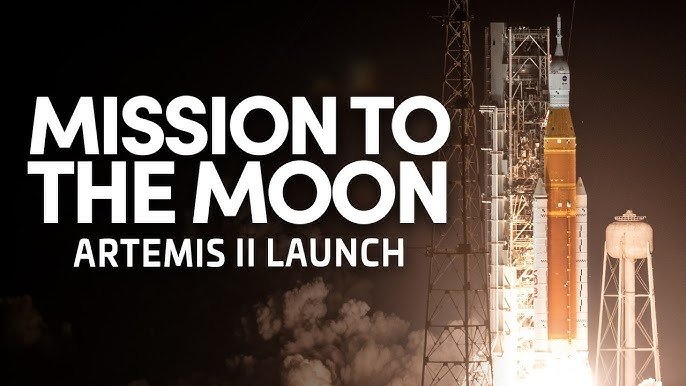
NASA is on the verge of a historic moment in space exploration: the launch of Artemis II, the first crewed mission to travel beyond Earth orbit in more than 50 years. Set to lift off no earlier than April 1, 2026, this mission will send four astronauts on a 10‑day journey around the Moon, marking a major milestone in humanity’s long‑term plans to return to the lunar surface and prepare for future missions to Mars.
What Artemis II Is and Why It Matters
Artemis II is part of NASA’s broader Artemis program, a decades‑long effort to establish a sustainable human presence on and around the Moon before venturing onward to Mars. While the Apollo missions in the 1960s and ‘70s made lunar landings, Artemis II’s goals are more extensive and technologically advanced.
Unlike Apollo crews that landed, Artemis II will orbit the Moon without landing, testing systems critical for future surface missions. This mission will validate life support, navigation, communication, and deep‑space operations with humans onboard, paving the way for the planned Artemis III lunar landing and eventual long‑term lunar bases.
Mission Profile and Timeline
The mission will launch from NASA’s Kennedy Space Center aboard the powerful Space Launch System (SLS) rocket, carrying the Orion spacecraft and its four‑person crew into deep space. After launch and initial system checkouts in Earth orbit, Orion will fire its engines to begin the translunar injection that sends it on a figure‑eight trajectory around the Moon.
Astronauts will travel roughly 230,000 miles from Earth and fly more than 4,000 miles above the Moon’s far side before returning — a trajectory known as a free‑return path that uses the Moon’s gravity to guide Orion back toward Earth without additional propulsion. The crew will re‑enter Earth’s atmosphere at about 25,000 mph and splash down in the Pacific Ocean near San Diego.
Historic Human Elements
Artemis II will also make history with its diverse crew. The four astronauts include:
- Commander Reid Wiseman
- Pilot Victor Glover – one of the first African‑American astronauts to travel beyond low Earth orbit
- Mission Specialist Christina Hammock Koch – the first woman to travel past Earth orbit on a lunar mission
- CSA Astronaut Jeremy Hansen – the first non‑American to fly beyond Earth orbit on a NASA lunar mission
These milestones highlight NASA’s efforts to reflect greater diversity and international cooperation in space exploration.
Scientific and Human Health Goals
Beyond proving hardware and navigation systems, Artemis II will conduct vital health and biomedical research. The mission includes studies of how deep‑space radiation affects the human body, tracking immune responses and physiological changes during the journey outside Earth’s magnetic shield — critical data for future long‑duration missions to Mars.
Astronauts will carry specialized biomedical experiments such as AVATAR (organ‑on‑a‑chip) technology, wear activity and sleep monitors, and provide biological samples to help scientists understand deep‑space effects on human health.
Artemis vs. Apollo: What’s New
While the Apollo missions proved that humans can reach the Moon, they were limited in technology, duration, and scope. Artemis II builds on decades of advancements — the SLS rocket is more powerful than the Saturn V, and Orion includes advanced life‑support and deep‑space communication systems. The mission also embraces diversity and international partnerships, a marked difference from the largely American‑centric Apollo era.
Mission Challenges and Preparations
Although launch preparations are advancing, NASA has faced technical challenges in recent months. Earlier in 2026, a planned March liftoff was delayed due to rocket hardware issues, underscoring the complexity of returning humans to deep space after decades.
Despite these hurdles, NASA officials report no current technical blockers ahead of the April launch window, and teams continue final tests at the Kennedy Space Center. Weather remains the primary remaining variable.
Looking Ahead: Moon and Mars
Artemis II is not an end in itself, but a vital rehearsal for the future. The mission enables Artemis III, targeted for a lunar landing attempt around 2027 or 2028, and contributes critical knowledge toward NASA’s long‑term vision of human exploration on Mars. Researchers see the Moon as both a proving ground and stepping stone for sustainable deep‑space habitation.
Conclusion
The Artemis II mission symbolizes a new era of human space exploration. It goes beyond revisiting the Moon, focusing on sustainability, science, diversity, and laying the foundation for humanity’s journey to Mars. As NASA prepares for liftoff, the world watches with anticipation for what could be one of the most transformative missions in space history.