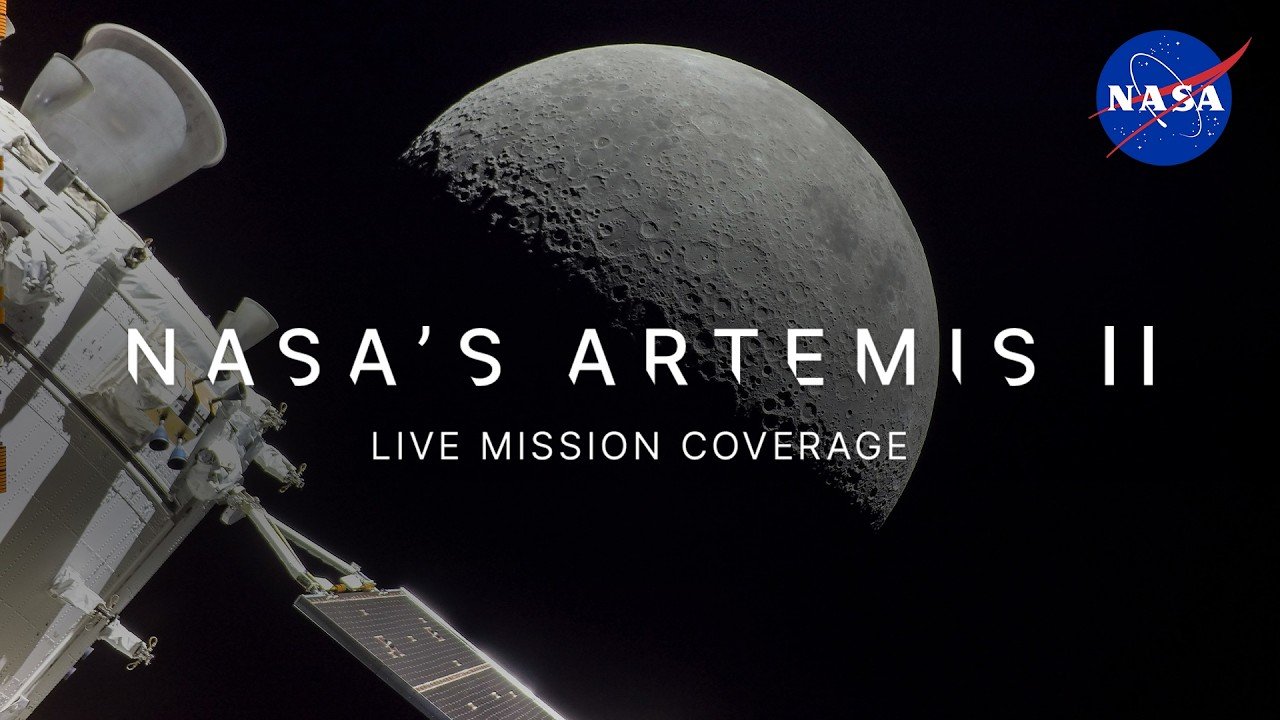
The world watched in awe as NASA’s Artemis II mission roared to life on April 1, 2026. It marked the first crewed flight to the Moon in more than half a century. Against a backdrop of thunderous flame and deep rumble, the Space Launch System (SLS) rocket lifted off from Kennedy Space Center in Florida. It carried four astronauts on a groundbreaking journey around the Moon and back to Earth.
A Launch Years in the Making
At 6:35 p.m. EDT, the powerful SLS rocket ignited atop Launch Pad 39B. It produced more than 8.8 million pounds of thrust. A deep rumble spread across the Space Coast. The rocket slowly ascended before gaining speed as it climbed higher. It left behind a long white vapor trail that gradually faded.
Observers described the sound as almost deafening. It felt physical, not just audible. The mood quickly shifted to joy and relief. This happened as the rocket passed maximum dynamic pressure, the point of highest structural stress.
NASA staff openly wept, cheered, and hugged. Months of tension were released after delays and intense preparation. One official described the moment as “giddy euphoria.” It was a shared emotional release after achieving a long-awaited goal.
First Crew Around the Moon in Over 50 Years
The Artemis II mission includes a diverse crew of four astronauts:
- Reid Wiseman (Commander) – veteran NASA astronaut and mission leader
- Victor Glover (Pilot) – first Black astronaut to travel beyond low Earth orbit
- Christina Koch (Mission Specialist) – first woman on a lunar flyby
- Jeremy Hansen (Mission Specialist) – first Canadian on a Moon mission
The mission will last 10 days. It will not include a Moon landing. Instead, it will follow a free-return trajectory around the Moon. This path ensures the spacecraft returns safely to Earth.
It is humanity’s most distant journey since the Apollo era. The mission will travel farther from Earth than any human mission in decades.
Mission Objectives and Scientific Goals
Testing the Orion Spacecraft and SLS Rocket
Artemis II aims to validate key systems with humans onboard. These include life support, navigation, communication, and manual piloting. The mission will test how the Orion spacecraft performs in deep space.
The SLS rocket is the most powerful operational launch vehicle. It is designed to take astronauts farther than ever before. This was only its second launch and the first with a human crew.
Human Performance and Systems Checks
After launch, Orion separated from the rocket’s upper stage. It entered Earth orbit, where astronauts began system tests. These included manual control, communication, and life support checks.
The crew will deploy solar arrays and perform routine operations. After that, a translunar injection burn will send Orion toward the Moon. Near the Moon, astronauts will conduct further tests and observations. These are essential for future missions like Artemis III and IV.
Historic Milestones and Records
Artemis II is expected to set several records:
- Farthest human distance from Earth in decades
- First woman to travel beyond Earth orbit
- First Black astronaut beyond low Earth orbit
- First Canadian on a lunar mission
These milestones reflect progress since the Apollo program ended in 1972.
Cultural and Global Reactions
The successful launch gained worldwide attention. Leaders across the globe praised the mission.
U.S. President Donald Trump commended the astronauts’ bravery. Canadian Prime Minister Mark Carney highlighted Jeremy Hansen’s historic role. European leaders acknowledged contributions from the European Space Agency, especially the Orion service module.
Veteran astronaut Charlie Bolden expressed pride and hope. He described the mission as a unifying achievement for humanity.
Google also marked the event with a special Doodle.
Public Excitement and Education Outreach
Millions watched the launch live. Large crowds gathered along Florida’s beaches and causeways. The atmosphere felt similar to the Apollo era.
Educational events and museum exhibitions were held worldwide. These efforts aimed to inspire future generations.
NASA streamed the mission across digital platforms. These included NASA TV, YouTube, and social media. Audiences followed every milestone and crew update in real time.
Looking Ahead: The Future of Lunar Exploration
Although Artemis II does not land on the Moon, it prepares for future missions.
- Artemis III (around 2028): Planned return to the Moon’s surface
- Artemis IV and beyond: Long-term human presence on the Moon
- Lunar infrastructure: Possible development of a research outpost
- Mars missions: Using the Moon as a stepping stone for deeper exploration
Space leaders see the Moon as more than a destination. It may become a hub for future deep-space missions.
Conclusion: A New Chapter in Human Spaceflight
Artemis II marks a pivotal moment in space exploration. Its successful launch signals a renewed commitment to deep space. The mission also highlights global cooperation and scientific ambition.
As Orion travels around the Moon and returns, the world watches with excitement. The journey represents a shared belief that space belongs to all humanity.